




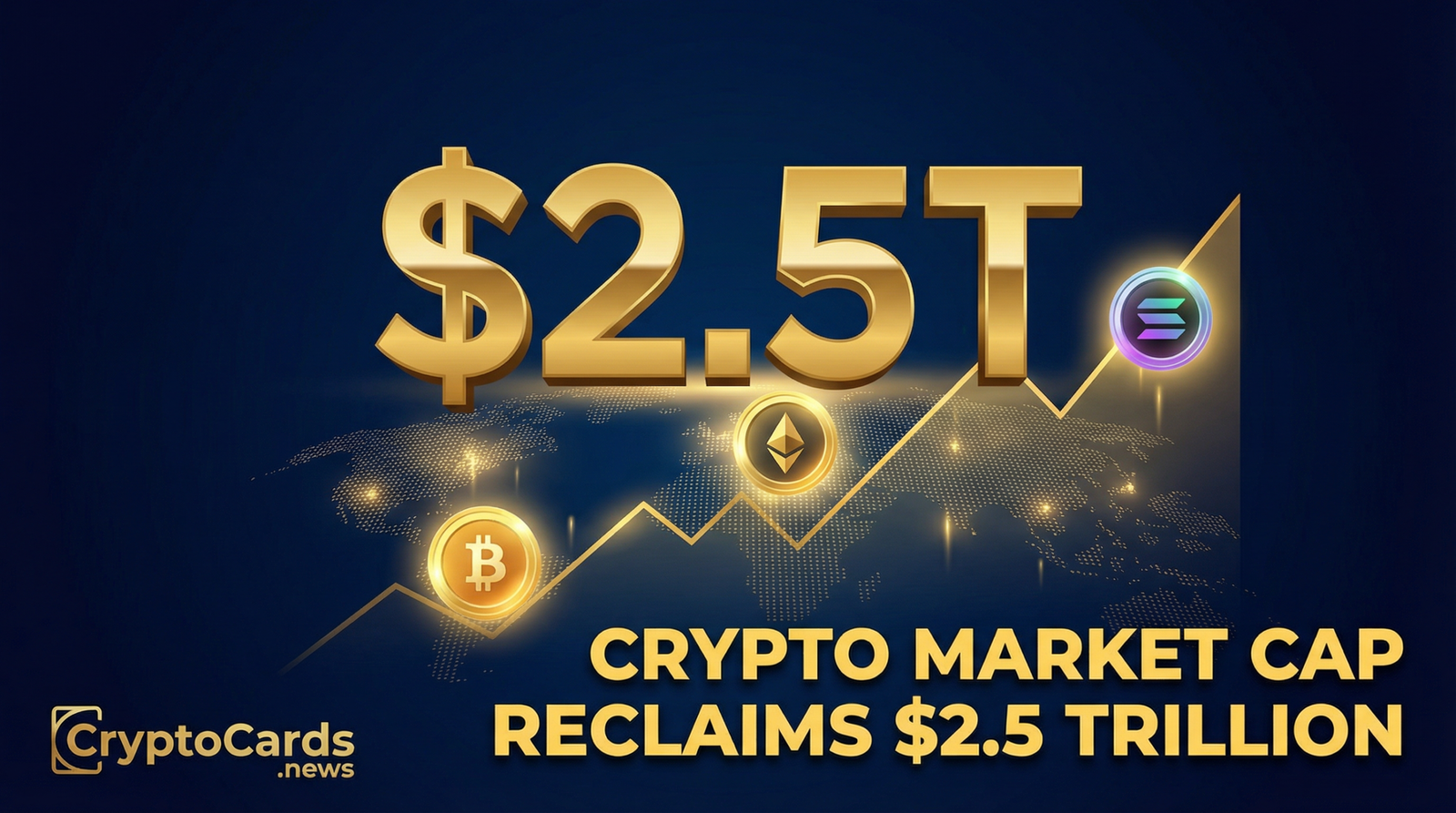
After months of cautious optimism, the global cryptocurrency market cap has surged back above $2.5 trillion, signaling a strong revival in the sector. The cryptocurrency market has been steadily recovering throughout the first quarter of 2026, culminating in a significant milestone in April as the total market capitalization exceeded $2.5 trillion once again. This remarkable turnaround comes in the wake of a challenging 2025 marked by regulatory uncertainties, macroeconomic pressures, and market corrections that had trimmed valuations considerably. However, sustained institutional interest, advancements in blockchain technology, and improving regulatory clarity created a fertile environment for renewed investor enthusiasm. Investors, traders, and enthusiasts alike witnessed a resurgence in trading volumes and valuations across the digital asset space, signaling a robust return of confidence and laying the groundwork for further market growth.
Several factors have coalesced to drive this impressive recovery in the global crypto market capitalization. Leading cryptocurrencies like Bitcoin and Ethereum staged notable price rallies, buoyed by significant upgrades and adoption announcements. Meanwhile, the emergence of innovative decentralized finance (DeFi) protocols, coupled with increasing corporate treasury allocations to digital assets, underscored renewed market vigor. Additionally, global regulatory frameworks, which appeared daunting last year, are now progressively becoming more balanced, promoting both investor protection and crypto innovation. This evolving landscape has encouraged retail and institutional participants to re-enter the market, contributing to the healthy volume and diversity observed in recent weeks. The $2.5 trillion benchmark represents not just a numerical milestone but also a critical psychological indicator that the crypto ecosystem is stabilizing and poised for its next growth phase.


Key Drivers Behind the Market Cap Surge
One of the foremost catalysts propelling the cryptocurrency market cap above $2.5 trillion is the renewed institutional adoption observed in early 2026. Major financial institutions, hedge funds, and publicly traded companies have substantially increased their exposure to leading cryptocurrencies, primarily due to improved market infrastructure and clearer regulatory guidelines. Notably, Bitcoin saw entry from prominent asset managers who launched new crypto ETFs and custody solutions that facilitated easier access for traditional investors. Meanwhile, Ethereum benefited from the widespread excitement around its recent scalability upgrade, which significantly reduced transaction fees and improved network speed, making it more attractive for decentralized applications and enterprise use cases. These developments have drawn fresh capital inflows, both from seasoned institutional players and new market participants familiarizing themselves with the evolving crypto ecosystem.
In addition to institutional investment, technological advancements across blockchain platforms contributed significantly to the market’s recovery. The progress of layer-2 solutions on Ethereum, interoperability protocols linking different blockchains, and the rising popularity of sustainable proof-of-stake networks have been pivotal. These innovations have enhanced transaction efficiency and reduced environmental concerns, two critical issues that previously hindered mainstream adoption. Furthermore, burgeoning DeFi platforms and non-fungible tokens (NFTs) maintained their momentum, attracting both retail users and developers to engage with the ecosystem. The combination of these technological enhancements with growing user engagement has created a virtuous cycle, attracting liquidity and heightening market capitalization towards and beyond the $2.5 trillion threshold.
Impact of Regulatory Clarity on Market Confidence
A significant contributor to the crypto market’s upward trajectory in 2026 is the evolving regulatory landscape, which continues to shift from uncertainty to structured governance. Governments worldwide have been working to implement clearer frameworks that balance investor protection with the promotion of innovation. For example, the United States finalized several regulatory guidelines that defined the legal status of cryptocurrency exchanges and DeFi platforms under the Securities and Exchange Commission (SEC) and Commodity Futures Trading Commission (CFTC) jurisdictions. Similarly, the European Union’s Markets in Crypto Assets (MiCA) regulation started coming into effect, providing comprehensive standards that address asset classification, custody, and anti-money laundering (AML) requirements. This newfound clarity reassures institutional investors who previously refrained from entering the market due to compliance fears.
With a transparent and predictable regulatory approach, market participants have gained the confidence needed to increase their cryptocurrency holdings without fearing sudden policy reversals or legal ambiguity. Regulatory cooperation between nations has also advanced, fostering cross-border crypto activities and enhancing market liquidity. Compliance measures incorporated by exchanges and firms have fortified the security and trustworthiness of the trading environment, which played a crucial role in attracting a broader investor base. The increasing clarity and stability in regulation promote the establishment of new financial products tied to cryptocurrencies, such as futures, options, and ETFs, which in turn contribute to valuation stabilization and market capitalization growth. Ultimately, this evolving regulatory environment is instrumental in promoting sustainable and healthy market expansion.
The Role of Market Sentiment and Macro Trends
Market sentiment has undergone a significant transformation to fuel the crypto rally above $2.5 trillion. Following bearish trends and lingering skepticism in 2025, the increasing acknowledgment of cryptocurrency as a legitimate asset class among major global economies has helped restore investor optimism. This positive sentiment was catalyzed by encouraging economic data, such as moderating inflation rates and stable interest rate policies, which reduced the risk-off environment that had previously pressured risky assets including cryptocurrencies. Additionally, the anticipation of Bitcoin’s next halving event later in 2026 has drawn speculative interest, driving price speculation upward. The rising utilization of crypto in payment systems as well as expanding partnerships between blockchain companies and traditional financial firms also sparked renewed enthusiasm.
At the macroeconomic level, inflationary concerns and currency devaluations in several emerging markets have driven increased demand for decentralized digital assets perceived as inflation hedges, such as Bitcoin and stablecoins. Moreover, growing geopolitical tensions and global financial market volatility have encouraged diversification into crypto assets by institutional and retail investors alike. The feature-rich evolving crypto ecosystem allows investors to participate in staking, yield farming, and liquidity mining, which offer attractive returns relative to conventional financial instruments. These macro trends not only enhance crypto’s appeal as an alternative investment but also contribute directly to expanding market capitalization as more participants allocate capital to digital assets.
Future Outlook: Sustainability and Innovation Driving Growth
Looking ahead, the sustainability of the crypto market’s growth beyond the $2.5 trillion milestone depends largely on continued innovation and the adoption of greener blockchain technologies. The widespread integration of proof-of-stake consensus mechanisms has significantly reduced the energy consumption of major protocols, addressing one of the critical environmental criticisms faced by the sector. This shift not only enhances the appeal among environmentally-conscious investors and regulators but also supports scalability improvements vital for mainstream adoption. Furthermore, expanding use cases such as decentralized autonomous organizations (DAOs), tokenized real-world assets, and metaverse applications illustrate the broadening utility of cryptocurrencies beyond mere speculative assets.
Innovation in security, interoperability, and user experience will also be pivotal in the next growth phase. Enhanced cross-chain protocols enable seamless asset transfers and collaboration among different blockchain networks, facilitating more complex decentralized finance and Web3 ecosystems. At the same time, improved custodial solutions and hybrid on-chain/off-chain services reduce user friction and increase trust in digital asset management. The increasing integration of artificial intelligence (AI) with blockchain technology offers promising avenues for automated decision-making and personalization. Collectively, these technological advancements underpin a future scenario where cryptocurrencies become integral components of global finance, further propelling valuation growth and mass adoption.
What This Means for Crypto Users
The resurgence of the global cryptocurrency market cap past $2.5 trillion has meaningful implications for everyday crypto users and investors. This milestone reflects a rejuvenated ecosystem characterized by enhanced security, regulatory clarity, diverse market participants, and robust technological progress. For retail investors, it signals a more stable and mature market environment with growing product innovations that offer expanded investment and utility opportunities beyond speculation. Institutional participation brings greater liquidity and price discovery, fostering a safer trading experience. Moreover, clearer regulations provide a framework to protect users from fraud and malpractice, increasing overall trust in the crypto space. As blockchain technology and crypto finance continue to evolve, everyday users can look forward to greater access to decentralized financial services, improved affordability, and integration into everyday economic activities, thus bridging the gap between traditional finance and the decentralized future.
Frequently Asked Questions
What factors contributed most to the crypto market rebound in April 2026?
The crypto market rebound was primarily driven by increased institutional adoption, technological advancements such as Ethereum’s scalability upgrade, and improved global regulatory clarity. Institutional players launched new crypto investment vehicles, leading to fresh capital inflows. Technological upgrades reduced transaction costs and improved network efficiency, attracting developers and users. Additionally, regulatory frameworks worldwide became more balanced and transparent, fostering confidence among investors and enabling cross-border crypto activity that increased liquidity and market capitalization.
How has regulatory clarity impacted the cryptocurrency market recently?
Regulatory clarity has brought significant stability and trust to the cryptocurrency market. Governments globally have implemented policies defining cryptocurrencies’ legal status, creating predictable compliance standards for exchanges and decentralized finance platforms. This has reassured institutional investors wary of legal ambiguities and enabled the launch of regulated financial products like ETFs and futures. The clarity also improves consumer protections and anti-money laundering measures, making the market safer and more accessible. The resulting confidence has attracted more participants and helped stabilize valuations, contributing directly to the market capitalization’s rebound.
What role do macroeconomic trends play in cryptocurrency adoption and market cap growth?
Macroeconomic trends such as inflation, currency instability, and geopolitical uncertainties play a significant role in driving cryptocurrency adoption. Digital assets like Bitcoin are increasingly perceived as hedges against inflation and currency depreciation, especially in emerging markets experiencing financial volatility. Economic uncertainty encourages diversification away from traditional assets into crypto, boosting demand and prices. Furthermore, low or stable interest rate environments reduce the opportunity cost of investing in volatile assets like crypto. The interplay of these macro factors, combined with crypto’s growing utility, directly contributes to increasing market capitalization and user base expansion.
What innovations are expected to drive the next phase of crypto market growth?
The next phase of crypto market growth will be driven by innovations in sustainability, interoperability, and user experience. The widespread adoption of energy-efficient consensus mechanisms such as proof-of-stake addresses environmental concerns, appealing to a broader investor base. Cross-chain interoperability protocols enable seamless asset movement and collaborative blockchain ecosystems, facilitating more complex decentralized applications. Enhancements in security, custody solutions, and hybrid on-chain/off-chain services reduce barriers for new users and improve trust. Integration of AI technologies with blockchain could automate and personalize financial services. These innovations will expand crypto’s real-world utility and adoption, fueling sustained market growth.
Related Articles
- Top Crypto Exchanges in 2026
- Best Crypto Wallets: Secure Your Digital Assets
- Best Crypto Cards: Maximize Your Spending Power
Stay informed with CryptoCards.news — your trusted source for crypto news, reviews, and guides. Explore our Best Crypto Exchanges, Best Crypto Wallets, and Best Crypto Cards guides.