




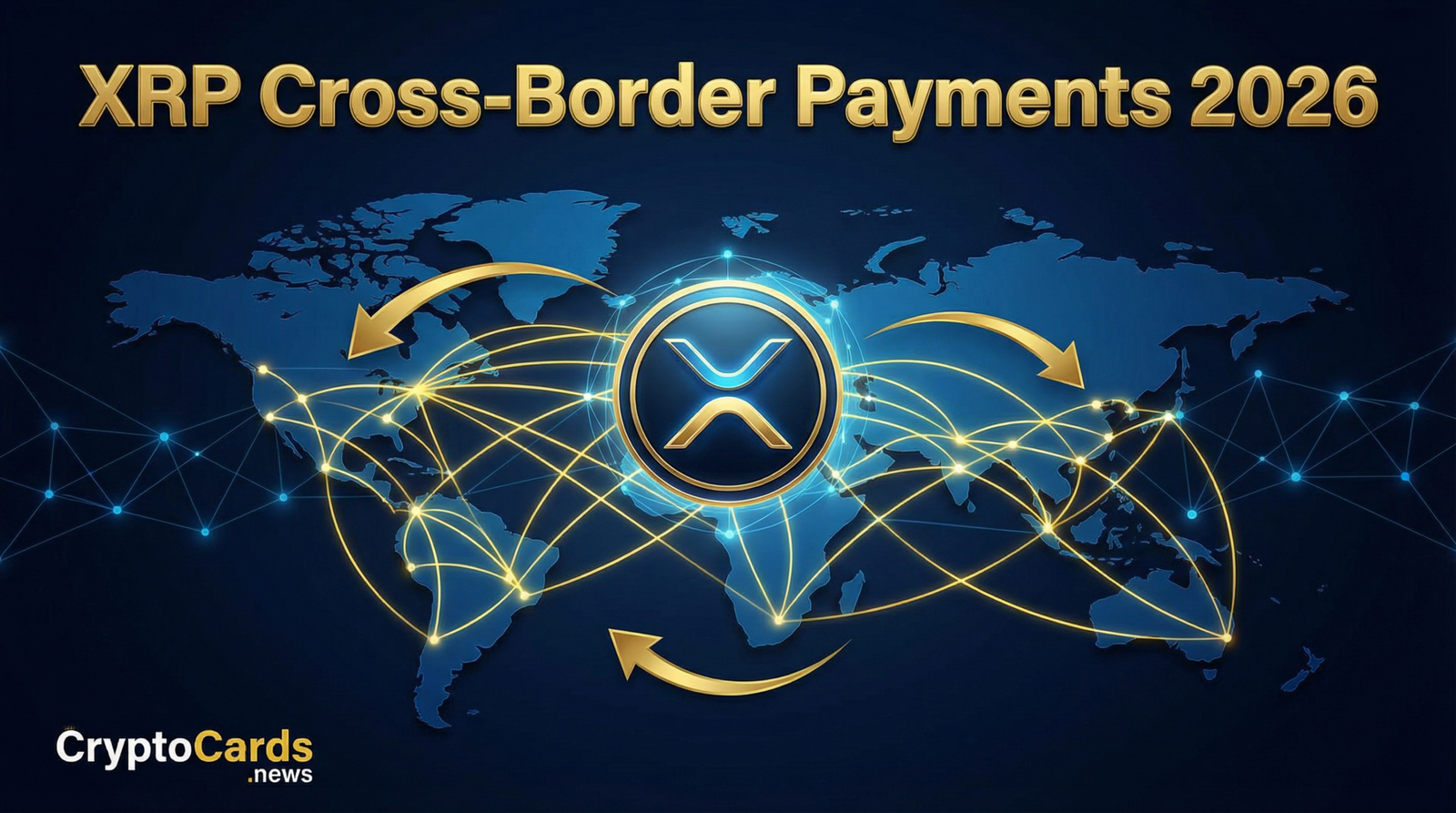
In 2026, Ripple’s XRP is redefining the ease and cost-efficiency of cross-border payments on a truly global scale. As the demand for faster and more cost-effective international money transfers intensifies, Ripple’s XRP protocol continues to make headlines in 2026 for its transformative role in cross-border payments. Serving as the native digital asset within RippleNet, XRP is now at the heart of a rapidly expanding global payments ecosystem. Financial institutions, payment providers, and remittance companies across multiple continents are increasingly adopting Ripple’s technology to leverage XRP’s unique features—speed, scalability, and reduced transaction costs. This surge in adoption reflects a wider industry trend where legacy correspondent banking systems are being challenged by blockchain-based solutions. Ripple’s ongoing global expansion strategy, backed by growing partnerships, regulatory clarity, and technological advancements, positions XRP as a pivotal bridge currency for international liquidity and settlements worldwide.
In the context of an interconnected global economy, inefficiencies in traditional cross-border payment systems have long plagued consumers and businesses alike. High fees, slow settlement times, and opaque processes have triggered the search for innovative blockchain solutions. Enter Ripple, whose XRP Ledger technology offers near-instantaneous transaction finality and cost savings that traditional SWIFT transfers cannot match. Since its inception, Ripple has relentlessly pursued global corridor expansion, integrating XRP into diverse payment rails that span multiple regions including Asia-Pacific, Latin America, Europe, and Africa. By April 2026, RippleNet’s footprint has expanded into over 150 countries with hundreds of financial institutions embracing XRP for their international liquidity needs. This article delves into the factors fueling Ripple’s global expansion, examines the integration of XRP into new remittance corridors, and explores the ecosystem developments shaping cross-border payments in 2026.

The Current State of Cross-Border Payments in 2026
Cross-border payments remain a critical yet complex component of global finance—responsible for trillions of dollars in annual transaction volumes. However, despite incremental improvements, major pain points persist in terms of cost, speed, transparency, and accessibility. Traditional correspondent banking arrangements, which underlie most international wire transfers, often involve multiple intermediaries, leading to higher fees and delays that can stretch from days to even weeks. By 2026, regulators and industry stakeholders have intensified efforts to modernize payment infrastructures by encouraging adoption of distributed ledger technology (DLT) and digital assets. Against this backdrop, Ripple’s XRP Ledger stands out for its capability to solve longstanding inefficiencies. The XRP Ledger permits payments to settle within seconds, with fees amounting to fractions of a cent—dramatically undercutting conventional systems. This technological advantage coincides with regulatory progress in key jurisdictions that now recognize and clarify digital asset use, fostering an environment ripe for blockchain-driven innovation in cross-border payments.
Moreover, customer expectations in 2026 have evolved alongside technology. Both corporate treasuries and everyday consumers demand instant payment experiences similar to domestic transfers. The rise of e-commerce and global trade heightens the necessity for reliable cross-border payment channels that do not burden merchants or consumers with excessive cost or complexity. This growing expectation shapes the competitive landscape, compelling payment service providers to seek platforms that enhance transaction transparency and provide real-time tracking. Ripple addresses these demands by integrating XRP with advanced APIs and cloud-native infrastructure, enabling seamless onboarding of partners and swift transaction processing. The combination of regulatory acceptance, user expectations, and blockchain capabilities has culminated in a fertile environment for XRP to scale its role in international finance more substantially than ever before.
RippleNet Expansion and Strategic Partnerships Driving XRP Adoption
Ripple’s aggressive global expansion in 2026 centers on broadening RippleNet’s network through strategic partnerships with banks, payment service providers, and fintech companies spanning developed and emerging markets. These collaborations enhance cross-border liquidity streams by enabling on-demand conversion of local currencies via XRP. Key corridors such as USD to Mexican Peso, Euro to Nigerian Naira, and Japanese Yen to Indian Rupee have witnessed significant increases in transaction volume using XRP as the bridge asset. Notably, Ripple forged agreements with leading institutions in Africa’s rapidly digitizing economies, where traditional payment infrastructures remain underdeveloped. By leveraging XRP, Ripple facilitates quicker remittances and greater financial inclusion for unbanked demographics. Similarly, partnerships within Southeast Asia and Latin America expand RippleNet’s reach into digital wallets, enabling everyday consumers to send money abroad instantly at minimal cost, reshaping the global remittance market.
The expansion strategy also emphasizes interoperability with other blockchain ecosystems and payment protocols. Ripple’s integration efforts now include cross-chain atomic swaps and multi-ledger compatibility, allowing XRP to function as a universal settlement layer across diverse technological environments. In parallel, RippleNet has improved its developer tools, enabling partners to customize payment solutions and embed them effortlessly within existing financial infrastructure. Regulatory engagement plays a key role in facilitating this growth, as Ripple actively participates in multi-jurisdictional compliance initiatives to ensure XRP-based payments meet anti-money laundering (AML) and know-your-customer (KYC) standards. The cumulative effect of network expansion, technology enhancements, and regulatory alignment is accelerating the mainstream adoption of XRP-enabled cross-border payments worldwide.
Technological Innovations Enhancing XRP’s Cross-Border Utility
Technological innovation remains central to enhancing XRP’s utility in cross-border payments in 2026. The XRP Ledger itself has undergone several protocol upgrades focused on scalability, security, and decentralization. One notable improvement is the implementation of layer-two solutions atop the XRP Ledger, which enable batch settlement transactions and micropayment channels with markedly lower latency and enhanced throughput. These enhancements augment the XRP Ledger’s already low-cost, instant transaction capabilities by reducing congestion during peak periods. Moreover, Ripple’s ongoing investment in artificial intelligence and machine learning integration aims to optimize liquidity management for financial institutions, predicting currency flow demand and automating pre-funding decisions. This smart automation minimizes exposure to currency volatility and improves capital efficiency for cross-border payment providers using XRP.
Another technological pillar supporting XRP’s expansion is Ripple’s cloud-based On-Demand Liquidity (ODL) service, which eliminates the need for pre-funded nostro accounts traditionally required for cross-border transactions. By enabling real-time sourcing of liquidity via XRP, ODL drastically reduces working capital tied up in international settlement corridors. The 2026 iteration of ODL includes enhanced risk controls, faster settlement confirmation, and seamless integration with decentralized finance (DeFi) liquidity pools. These features empower payment providers and enterprises to diversify liquidity sources and optimize cost structures. Furthermore, Ripple’s commitment to energy efficiency upgrades and carbon neutrality protocols underscores the sustainability credentials of XRP-based payments—an increasingly critical consideration among environmentally conscious global financial institutions and consumers.
Regulatory and Market Challenges for Ripple’s Global Expansion
Despite significant progress, Ripple’s journey in deploying XRP for cross-border payments globally is not without challenges. Regulatory scrutiny remains a primary concern, as varied jurisdictional stances towards digital assets can impose compliance complexities. Although 2026 has witnessed clearer frameworks in many countries, issues like the classification of XRP as a security versus commodity continue to spur legal discourse in select markets. Ripple’s proactive approach with regulators, including licensing and sandbox initiatives, helps mitigate uncertainty but does not entirely eradicate regulatory risk. Additionally, legacy institutions while partnering increasingly with Ripple, still face internal cultural and technical barriers to full blockchain integration, slowing adoption pace in some regions. Competition from central bank digital currencies (CBDCs) and other blockchain protocols also introduces a competitive dimension to the global payments landscape, requiring Ripple to innovate continuously.
Market volatility and liquidity availability in emerging corridors represent another challenge influencing XRP’s cross-border use. Unlike fiat currencies backed by sovereign guarantees, XRP’s price fluctuates on crypto exchanges, which can increase operational risk for payment providers. Ripple addresses this by employing hedging strategies and developing stablecoin-linked settlement pairs to reduce exposure. Nonetheless, educating institutional partners about managing digital asset risk remains a persistent effort. Furthermore, infrastructural gaps in internet access and digital literacy in some underbanked regions limit the immediate scalability of blockchain payments. Ripple collaborates closely with local players and governments to facilitate digital infrastructure development and foster adoption at the community level. Balancing these challenges with its ambitious growth targets shapes Ripple’s strategic roadmap and influences the trajectory of XRP-powered global payments.
What This Means for Crypto Users
For everyday crypto users and global citizens, Ripple’s expansive use of XRP in cross-border payments presents compelling advantages. Faster transaction speeds and dramatically reduced fees translate directly into cost savings and increased convenience for anyone sending or receiving money internationally. Whether it’s migrant workers sending remittances back home or businesses paying overseas suppliers, the efficiency gains Ripple enables lead to tangible improvements in financial inclusion and economic participation. Moreover, the transparency and traceability of XRP payments enhance trust and security, critical factors for mass adoption. As Ripple continues to grow its global network in 2026, everyday users can anticipate a more seamless, affordable, and accessible cross-border payment experience. This evolution not only shifts competitive dynamics in the payments industry but also heralds a broader democratization of international finance facilitated by blockchain technology and digital assets like XRP.
Frequently Asked Questions
How does XRP improve the speed of cross-border payments compared to traditional systems?
XRP significantly improves cross-border payment speed by leveraging its high-performance XRP Ledger, which settles transactions in 3-5 seconds—much faster than traditional correspondent banking which can take several days. This rapid settlement is possible because XRP operates on a decentralized blockchain network with a consensus protocol that validates transactions quickly, eliminating intermediaries and complex messaging systems like SWIFT. Additionally, Ripple’s On-Demand Liquidity (ODL) service uses XRP as a bridge currency to source liquidity instantly in multiple local currencies, bypassing the need for pre-funded accounts and speeding up the payment lifecycle. As a result, XRP-based cross-border transfers are near-instant, enabling businesses and individuals to access their funds almost immediately after sending.
What regions are seeing the most significant adoption of Ripple’s XRP for cross-border payments in 2026?
In 2026, Ripple’s XRP adoption for cross-border payments is most pronounced in emerging markets and developing regions where traditional banking infrastructure is underdeveloped. Africa stands out as a key growth area due to increasing digitization and demand for affordable remittances. Southeast Asia and Latin America also show strong uptake, supported by Ripple’s partnerships with local banks and fintechs facilitating payments across USD, EUR, MXN, INR, and other regional currencies. Additionally, Ripple has expanded into corridors linking developed markets like Japan and the EU with underbanked regions, expanding financial inclusion. This geographic diversity in adoption reflects Ripple’s strategic focus on corridors with high remittance volumes and unmet payment efficiency needs.
What regulatory issues does Ripple face in expanding XRP’s use globally?
Ripple faces several regulatory challenges in expanding XRP’s global use, notably the ongoing legal debate in some jurisdictions over whether XRP constitutes a security. While many countries have implemented clearer frameworks for digital assets, inconsistencies remain, affecting compliance requirements and market access. Anti-money laundering (AML) and know-your-customer (KYC) regulations also impose rigorous standards on Ripple and its partners. Adhering to these mandates across multiple and often divergent legal environments requires significant operational resources. Additionally, Ripple must navigate licensing requirements and maintain transparency with regulators to build trust. Despite these challenges, Ripple’s proactive engagement and sandbox participation aim to foster regulatory clarity and acceptance, smoothing XRP’s path towards mainstream financial use.
How does Ripple mitigate XRP’s price volatility when used in cross-border payments?
Ripple mitigates XRP’s inherent price volatility risks through several mechanisms tailored for cross-border payments. Its On-Demand Liquidity (ODL) service enables rapid conversion of XRP to local fiat currencies, minimizing the time funds are exposed to market fluctuations. This near-instant exchange limits value depreciation during transactions. Ripple also employs hedging strategies and collaborates with liquidity providers to stabilize the trading environment. Furthermore, emerging integrations with stablecoins and the ability to source liquidity from multiple pools allow payment providers to balance risk effectively. Education and tooling help institutional users manage volatility exposure proactively. These combined approaches ensure that XRP’s benefits in speed and cost do not come at the expense of financial stability for payment participants.
Related Articles
- Top Crypto Exchanges in 2026
- Best Crypto Wallets: Secure Your Digital Assets
- Best Crypto Cards: Maximize Your Spending Power
Stay informed with CryptoCards.news — your trusted source for crypto news, reviews, and guides. Explore our Best Crypto Exchanges, Best Crypto Wallets, and Best Crypto Cards guides.