




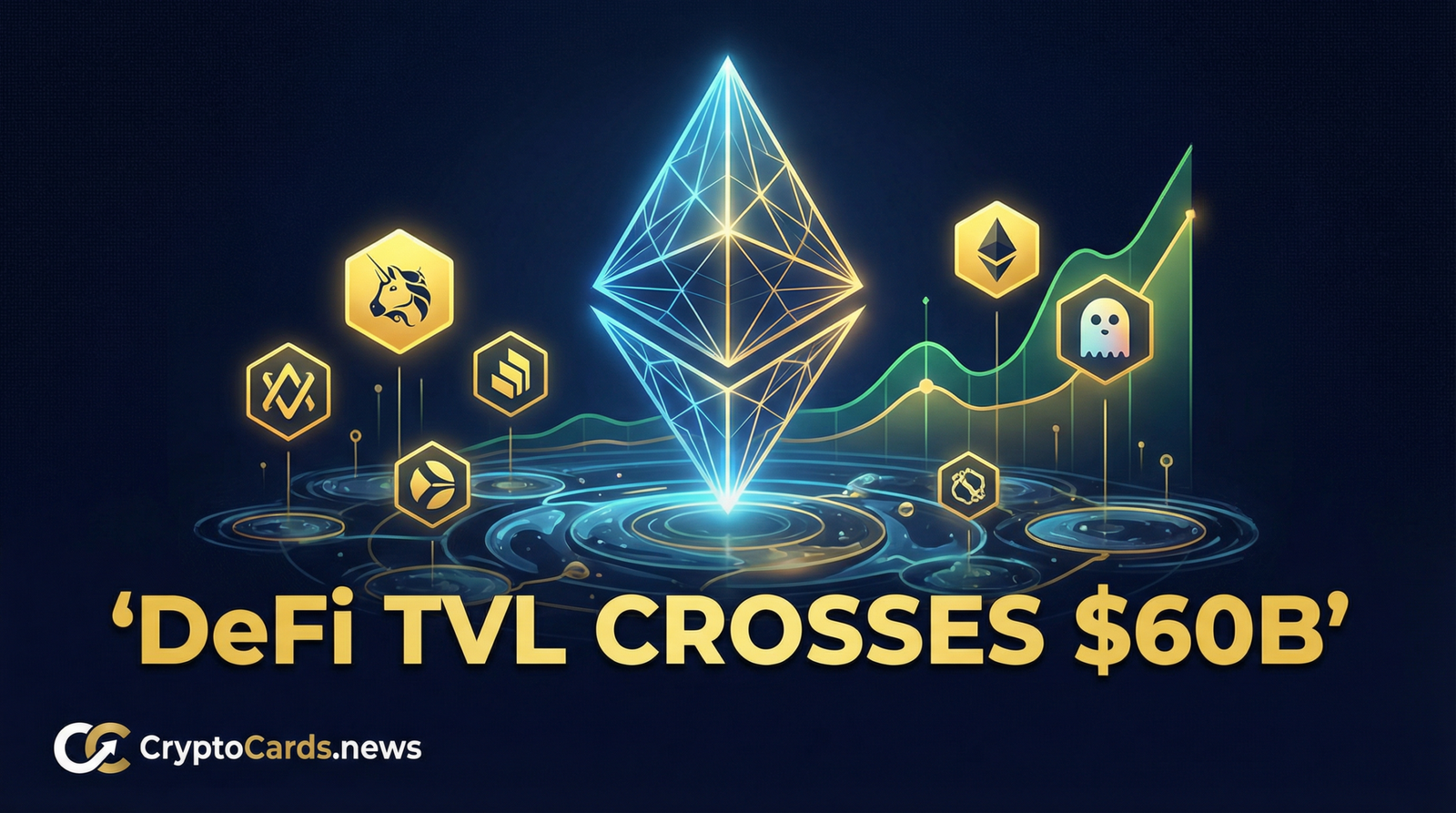
In a landmark development for decentralized finance, Ethereum’s DeFi Total Value Locked has surpassed the $60 billion mark this April 2026. As of April 2026, Ethereum’s decentralized finance (DeFi) ecosystem has achieved a significant milestone, with Total Value Locked (TVL) climbing beyond $60 billion. This achievement underscores Ethereum’s continued dominance as the leading blockchain platform fueling the DeFi revolution. The increasing TVL demonstrates sustained investor confidence, growing adoption, and the maturing technological infrastructure powering DeFi protocols. Market analysts attribute this surge to a favorable macroeconomic environment for crypto assets, expanding use cases in lending, decentralized exchanges (DEXs), and yield farming, along with enhanced scalability solutions on the Ethereum network. The milestone marks an important juncture in the broader digital asset industry, reflecting how decentralized finance is transitioning from early innovation to mainstream financial infrastructure.
Ethereum’s journey to a $60 billion TVL has been driven by pioneering DeFi projects, continuous protocol upgrades, and a burgeoning community of users, developers, and institutional participants. The ecosystem has not only expanded in sheer size but has diversified across multiple DeFi verticals including lending, stablecoins, synthetic assets, derivatives, and liquidity provision. Enhanced Layer 2 solutions, such as rollups and sidechains, have played a pivotal role in reducing fees and boosting transaction throughput—crucial factors driving user growth. Furthermore, regulatory clarity in key jurisdictions, combined with increasing institutional interest, have helped cement Ethereum’s unrivaled position as the foundation of DeFi activity. As DeFi protocols innovate with new financial primitives, the $60 billion TVL benchmark signals robust growth momentum and increased resilience in this rapidly evolving space.


Breaking Down the TVL Surge: Key Drivers Behind the Growth
The explosive growth of Ethereum’s DeFi Total Value Locked crossing $60 billion is attributable to several converging factors that have sparked renewed optimism and investor engagement. First, improvements in network scalability have alleviated previous pain points around gas fees and transaction speeds. Adoption of Layer 2 scaling solutions like optimistic rollups and zk-rollups has allowed users to enjoy reduced costs and faster confirmations, significantly enhancing DeFi’s usability for both retail and institutional participants. Secondly, the expansion of innovative protocol offerings has attracted more capital. Lending platforms continue to grow by offering attractive interest rates and collateral options, while decentralized exchanges have improved liquidity and user experience, drawing more traders. Furthermore, mechanisms such as automated market makers (AMMs) and composability between protocols enable users to maximize returns by layering strategies effortlessly. Together, these factors create an increasingly attractive environment for capital inflow into Ethereum-based DeFi projects.
Beyond technical advances, macroeconomic and market dynamics have also played a critical role. The persistent low-yield environment in traditional finance has prompted investors to diversify into alternative assets and income streams, making DeFi’s high-yield opportunities particularly appealing. Moreover, burgeoning interest from institutional investors and crypto-native funds has injected substantial capital into the ecosystem, driving TVL growth. The improved security audits, risk management practices, and custodial solutions have nurtured trust among larger stakeholders wary of smart contract vulnerabilities in earlier years. Regulatory developments in key global markets have also reduced uncertainties, establishing a clearer framework for compliant DeFi engagement. Collectively, these factors have underpinned the rapid TVL expansion, reinforcing Ethereum’s role as the backbone of decentralized finance.
Impact of Ethereum Upgrades and Layer 2 Protocols on DeFi Liquidity
Ethereum’s recent network upgrades, including the anticipated implementation of Ethereum 2.0 phases and enhancements to consensus mechanisms, have dramatically improved the platform’s capacity to support robust DeFi liquidity. The transition from Proof of Work to Proof of Stake, completed in prior years, paved the way for faster block times, reduced energy consumption, and increased throughput. Alongside core improvements, Layer 2 protocols have emerged as game-changers. Rollups bundle hundreds of transactions off-chain and submit them in a single aggregated form to the Ethereum mainnet, slashing fees and increasing transaction speeds. This evolution effectively unlocks DeFi’s full potential, making complex financial operations affordable and accessible. Users can now participate in activities like yield farming, liquidity mining, and decentralized derivatives trading without being hampered by exorbitant gas costs, thus catalyzing greater TVL accumulation across projects.
Moreover, Layer 2 solutions foster interoperability between disparate DeFi protocols, enabling smoother integration and composability. Projects built on these scalable solutions benefit from enhanced user experiences, encouraging more consistent liquidity provision and longer-term capital commitments. Protocols such as Arbitrum, Optimism, and StarkNet have seen substantial growth, onboarding millions of users who contribute to TVL growth outside the main Ethereum chain while still leveraging its security model. These advancements have also incentivized developers to innovate and deploy novel DeFi instruments that were previously cost-prohibitive. The cumulative effect has been not just an increase in quantitative TVL but also qualitative improvements in capital efficiency and network effect magnitudes within Ethereum’s DeFi landscape.
Diversification of DeFi Services and Their Role in the TVL Expansion
Another critical element fueling the surge in Ethereum’s DeFi TVL is the ecosystem’s diversification across multiple financial use cases that cater to a wide range of user needs and risk appetites. Lending and borrowing platforms remain core contributors, with protocols enabling users to collateralize assets and obtain loans without intermediaries. Stablecoins, often issued on Ethereum, serve as the critical liquidity backbone, facilitating seamless value transfer and settlement within various DeFi services. Additionally, the rise of synthetic assets and tokenized derivatives has introduced new pathways for exposure to traditional market assets such as equities, commodities, and fixed income, broadening DeFi’s appeal. This diversification has strengthened the ecosystem’s resilience and attracted cross-sector capital inflows, ultimately sustaining the TVL growth.
Liquidity pools supporting automated market makers have also captured an increasing share of the TVL by allowing users to earn fees through liquidity provision. Innovations in incentive structures, such as dynamically adjusting rewards and liquidity mining campaigns, have drawn considerable attention from both retail and professional users eager to capture yields. Decentralized insurance protocols have begun safeguarding participants against protocol risks, mitigating barriers to adoption. Furthermore, governance tokens and decentralized autonomous organizations (DAOs) orchestrate ecosystem development and incentivize community engagement, fueling iterative protocol improvements. As DeFi matures, this heterogeneity in service offerings and financial instruments promotes greater capital cycling within Ethereum’s network, solidifying its position as the preeminent DeFi hub.
Challenges Ahead: Security, Regulation, and Market Dynamics
Despite the impressive achievement of surpassing $60 billion in TVL, Ethereum’s DeFi space continues to face critical challenges that could impact sustained growth. Security remains a paramount concern; smart contract vulnerabilities, flash loan attacks, and exploits still occur with alarming regularity, eroding user confidence and capital safety. While developers have enhanced auditing standards and introduced formal verification techniques, risks inherent to novel DeFi products demand constant vigilance. Additionally, the regulatory landscape remains complex and evolving, with authorities worldwide grappling to apply existing financial laws to decentralized protocols. Compliance costs, policy uncertainties, and potential restrictions on certain services may introduce friction, slowing institutional adoption and impacting market enthusiasm.
Market volatility and macroeconomic shifts are further variables that can influence DeFi TVL trajectories. Fluctuations in cryptocurrency prices affect collateral valuations and users’ leverage capacities, creating feedback loops that may lead to rapid liquidity shifts. Moreover, emerging competitors such as alternative smart contract platforms, cross-chain bridges, and centralized offerings pose strategic challenges to Ethereum’s market share. To maintain momentum, the Ethereum community and developers must prioritize interoperability, security enhancements, and regulatory engagement. Balancing innovation with safety and compliance will be essential to sustain and grow the ecosystem’s substantial TVL, ensuring that Ethereum remains at the forefront of decentralized finance’s next evolution.
What This Means for Crypto Users
For everyday crypto users, Ethereum’s DeFi TVL surpassing $60 billion is more than just a headline—it signals growing maturity, security, and diversity in financial tools accessible without intermediaries. This milestone means users now have access to an expansive range of decentralized lending, trading, and yield-generating products that are increasingly affordable and trustworthy. Enhanced scalability reduces costly transaction fees, making DeFi activities viable for everyday participants, not just whales or institutional investors. With more liquidity and diversified protocols, users can benefit from better pricing, deeper markets, and more reliable returns. However, it also means users should remain vigilant, continuing to assess protocol risks and regulatory developments as the ecosystem evolves. Ultimately, this milestone embodies the promise of DeFi: democratized access to efficient, borderless financial services reshaping how value is stored, exchanged, and grown worldwide.
Frequently Asked Questions
What does Total Value Locked (TVL) mean in the context of Ethereum DeFi?
Total Value Locked (TVL) represents the total amount of cryptocurrency assets deposited and actively used within DeFi protocols on the Ethereum network. It indicates the overall liquidity and capital committed in lending, borrowing, trading, and other decentralized financial services. A higher TVL generally reflects greater user trust, engagement, and market size within the DeFi ecosystem, serving as a key metric to gauge its growth and health.
How have Layer 2 solutions contributed to Ethereum’s DeFi TVL growth?
Layer 2 solutions, such as optimistic rollups and zk-rollups, process transactions off Ethereum’s mainnet, aggregating them to reduce network congestion and gas fees. This substantially lowers the cost and increases the speed of executing DeFi operations, making protocols more accessible to a wider user base. By enhancing scalability, Layer 2 solutions have driven more capital into DeFi applications, directly contributing to the surge in total value locked on Ethereum.
What are the main risks associated with investing in Ethereum-based DeFi protocols?
Investing in Ethereum DeFi entails several risks, including smart contract vulnerabilities that can be exploited, leading to potential loss of funds. Market volatility can impact collateral valuations and liquidity. Regulatory environments are uncertain and may introduce compliance burdens or restrictions. Additionally, risks like impermanent loss, protocol governance failures, and potential flash loan attacks exist. Users should conduct thorough research, use audited protocols, and diversify their exposure to mitigate these risks.
Why is the $60 billion TVL milestone important for the broader crypto market?
The $60 billion TVL milestone demonstrates the growing scale and adoption of decentralized finance, affirming Ethereum’s role as the leading DeFi platform. It indicates increasing trust from both retail and institutional investors, contributing to greater liquidity and market stability across the crypto ecosystem. This growth attracts further innovation, partnerships, and regulatory attention, potentially accelerating mainstream acceptance of crypto and decentralized financial services worldwide.
Related Articles
- Top Crypto Exchanges in 2026
- Best Crypto Wallets: Secure Your Digital Assets
- Best Crypto Cards: Maximize Your Spending Power
Stay informed with CryptoCards.news — your trusted source for crypto news, reviews, and guides. Explore our Best Crypto Exchanges, Best Crypto Wallets, and Best Crypto Cards guides.