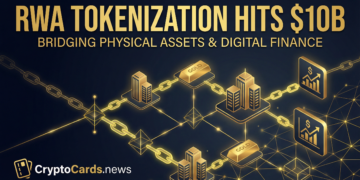




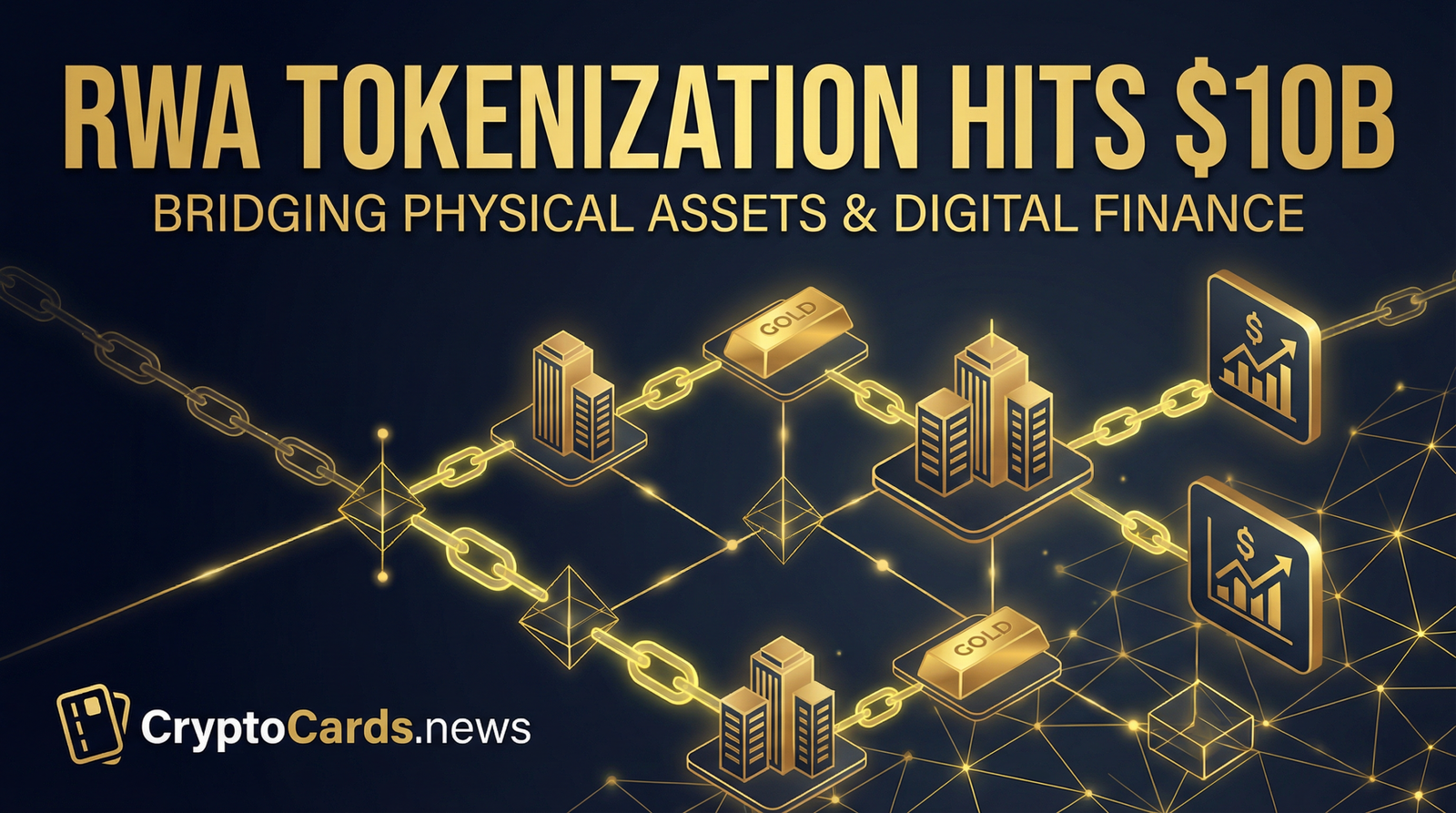
Real-world asset tokenization has now officially crossed the $10 billion mark on the blockchain, signaling a seismic shift in global finance. In April 2026, the blockchain ecosystem witnessed a landmark achievement as the total value of tokenized real-world assets (RWAs) vaulted past the $10 billion threshold. This considerable milestone underlines growing investor confidence and broad adoption of blockchain technology beyond cryptocurrencies into tangible assets such as real estate, commodities, and private equity. By representing physical assets as digital tokens on decentralized ledgers, tokenization unlocks liquidity, enables fractional ownership, and streamlines cross-border transactions. This breakthrough reflects years of technological maturation, regulatory progress, and innovative financial engineering that continue to propel asset tokenization from experimental projects into mainstream capital markets.
The journey toward this $10 billion valuation has been fueled by multiple converging factors, including rising demand for alternative investment opportunities, institutional interest in blockchain infrastructure, and the evolution of compliant token issuance frameworks. Tokenized assets now encompass a massive spectrum — from commercial real estate portfolios to art collections and supply chain goods — bridging the gap between the traditional finance ecosystem and emerging decentralized finance (DeFi) models. This profound expansion has accelerated not only because of improved blockchain scalability and security but also due to global regulatory bodies creating clearer guidelines that promote investor protection without stifling innovation. As tokenization reaches this critical mass, it is reshaping asset management, capital raising, and investor diversification strategies worldwide.


Breaking Down the $10 Billion Milestone: Key Contributors
The surpassing of the $10 billion threshold in tokenized RWAs on chain is the culmination of several key asset verticals experiencing rapid growth. Real estate tokenization leads the pack, accounting for over 40% of the total tokenized asset value. Major commercial and residential projects worldwide have embraced fractional ownership through blockchain, enabling smaller investors access to markets traditionally dominated by large institutional players. Prominent platforms facilitating real estate token issuance have reported record growth in transaction volumes and investor signups. Besides real estate, tokenization of financial instruments such as private equity and venture capital stakes has attracted sophisticated investors seeking increased liquidity and transparency, boosting the aggregate market cap substantially.
Commodities have also played a pivotal role, with gold and oil-backed tokens gaining visibility as inflation hedges and capital preservation tools. These commodities, represented by certified digital tokens, enable instantaneous settlement and provide investors new avenues to diversify portfolios without the usual storage and logistics challenges. Additionally, emerging sectors like art and collectibles have begun leveraging blockchain to authenticate provenance and fractionalize ownership, contributing meaningfully to the valuation surge. The synergy between decentralized finance protocols and institutional custodians ensures seamless integration of these assets across exchanges and wallets, enhancing market depth and reducing operational friction. Together, these sectors illustrate the broadening footprint of blockchain in tangible asset management.
Technological Advances Fueling Tokenization Growth
At the heart of this rapid ascent is a wave of technological innovations making asset tokenization more scalable, secure, and accessible. Layer-2 scaling solutions have dramatically lowered transaction costs and increased throughput, enabling real-time trading and settlement of asset-backed tokens. Interoperability protocols now allow tokenized assets to move fluidly across different blockchain ecosystems, enhancing liquidity pools and avoiding ecosystem lock-ins. Advances in smart contract standards have introduced robust frameworks for legal compliance, automated dividend distributions, and rights management, providing institutional-grade features for regulated markets. Additionally, zero-knowledge proof mechanisms enhance privacy for asset holders while maintaining transparency for regulatory reporting, striking a balance between confidentiality and trust.
Complementing blockchain upgrades are innovations in token standards designed specifically for real-world assets, incorporating governance mechanisms that reflect the underlying asset’s legal nuances. Oracles are becoming increasingly sophisticated, securely providing real-time off-chain data—such as market prices, ownership records, and regulatory updates—directly into blockchain environments to enable dynamic contract execution. The emergence of standardized token registries and decentralized identity solutions also reinforces the integrity of tokenized assets, mitigating fraudulent activities. These technological layers combined make it feasible for institutional investors and retail participants alike to onboard with confidence, scale portfolios rapidly, and execute cross-border transactions efficiently, resulting in a more inclusive and liquid financial ecosystem than ever before.
Regulatory Landscape Shaping Tokenized Asset Adoption
Regulatory clarity has been a cornerstone in unlocking tokenization’s potential to reach this $10 billion milestone. Since 2024, governments worldwide have incrementally introduced policies that recognize digital tokens representing tangible assets as legitimate financial instruments. Regulatory sandboxes in major financial hubs such as Singapore, the EU’s MiCA framework, and the US SEC’s engagement with tokenization projects have cultivated a balanced environment fostering innovation while protecting investors. Legal frameworks now commonly require rigorous KYC/AML processes, custody standards, and transparent disclosure protocols, providing crucial trust pillars for the sector. This regulatory evolution alleviates uncertainty that previously hindered institutional adoption and cross-border offerings.
Moreover, several jurisdictions have enacted laws specifically addressing asset tokenization and digital securities to establish legal certainty on ownership rights, transferability, and enforceability of smart contracts. These developments expedite onboarding of real-world assets by registered entities and broaden access to participation from qualified investors globally. Regulatory technology (RegTech) solutions integrated with blockchain platforms facilitate continuous compliance monitoring, audit trails, and reporting, streamlining the regulatory burden and fostering scalability. Despite variations in regional approaches, the global trend overwhelmingly favors frameworks that integrate blockchain innovation with traditional financial safeguards, creating a sustainable growth trajectory for tokenized asset markets.
Market Implications and Future Outlook
Crossing the $10 billion benchmark elevates the market for tokenized real-world assets into a new phase poised for exponential growth. This milestone signals confidence from diverse stakeholders including institutional investors, asset managers, regulators, and technology providers, accelerating capital inflows. As liquidity deepens and secondary markets mature, tokenized assets stand to rival traditional asset classes in portfolio allocations. This shift encourages innovation across asset origination, structuring, and distribution channels, enhancing financial inclusion by lowering minimum investment thresholds and enabling fractional ownership. Investors benefit from enhanced transparency, quicker settlement times, and programmable features that unlock creative financial products.
Looking forward, the integration of asset tokenization with emerging technologies such as AI-driven asset management, advanced DeFi platforms, and cross-chain liquidity networks will further catalyze ecosystem development. Market participants anticipate broader adoption in emerging markets, SME financing, and green asset tokenization, harnessing the transparency and trust of blockchain to mobilize capital for sustainability projects. However, challenges remain in harmonizing standards globally, scaling custody solutions, and educating market participants. Nonetheless, the foundation set by the $10 billion milestone establishes asset tokenization as a transformative force reshaping modern finance, with potential to unlock trillions in untapped value in the coming decade.
What This Means for Crypto Users
For everyday crypto users, this $10 billion milestone is more than a headline figure—it represents a paradigm shift in how people can interact with wealth and invest on a global scale. Tokenization democratizes access to assets that were previously locked behind hefty capital requirements or regional constraints, such as prime real estate or rare collectibles. This means everyday investors can now own a fraction of high-value assets, diversify portfolios, and participate in secondary markets with unprecedented ease and security. In addition, tokenized assets integrated into DeFi protocols introduce new income streams and liquidity options previously unavailable outside traditional finance. As tokenization platforms evolve to become more user-friendly and compliant, retail investors stand to gain a level of financial empowerment and inclusion that redefines the future of investing.
Frequently Asked Questions
What exactly is real-world asset tokenization?
Real-world asset tokenization refers to the process of creating digital tokens on a blockchain that represent ownership or rights to physical assets such as real estate, commodities, artworks, or financial instruments. These tokens allow assets to be divided into smaller units, enabling fractional ownership, and can be traded on blockchain networks, bringing greater liquidity, transparency, and efficiency compared to traditional asset management. Tokenization bridges the gap between physical markets and decentralized digital ecosystems by embedding asset details and legal rights into smart contracts, facilitating automated governance and instant settlement.
How did tokenized assets reach $10 billion value on-chain?
The $10 billion valuation milestone was reached through a combination of increased institutional adoption, growing investor appetite for fractional ownership, advancements in blockchain technology, and supportive regulatory frameworks. Leading sectors such as real estate, commodities, private equity, and collectibles embraced tokenization to unlock liquidity and access new markets. Improved blockchain scalability, sophisticated smart contracts, and interoperable protocols made trading and custody more reliable and efficient. At the same time, governments and regulators introduced clear guidelines and compliance requirements that built trust and facilitated broader market participation, collectively driving mass adoption and market expansion.
What are the main benefits of investing in tokenized real-world assets?
Investing in tokenized real-world assets offers several benefits including enhanced liquidity through fractional ownership, lower barriers to entry allowing smaller investments, greater transparency provided by blockchain’s immutable ledger, and accelerated settlement times compared to traditional asset transfers. Additionally, tokenization enables programmable features such as automated dividend payments and smart contract-based governance, increasing efficiency and investor control. It also facilitates global, cross-border investment without intermediaries, reducing costs and administrative burdens. Together, these advantages create a more inclusive, accessible, and efficient market landscape for a wider range of investors.
What challenges remain for the future growth of asset tokenization?
Despite rapid growth, several challenges persist, including regulatory fragmentation across jurisdictions, which complicates cross-border token offerings and compliance. Custody and security of tokenized assets demand robust solutions to safeguard digital keys and asset rights, especially for institutional adoption. Interoperability issues between different blockchains can hamper liquidity and market integration. Educating investors and traditional finance participants about tokenization’s risks and benefits remains crucial. Moreover, standardizing legal frameworks that fully recognize smart contract-enforced ownership and transfer rights is still evolving. Addressing these concerns will be vital to scaling tokenization from $10 billion to potentially trillions in total value.
Related Articles
- Top Crypto Exchanges in 2026
- Best Crypto Wallets: Secure Your Digital Assets
- Best Crypto Cards: Maximize Your Spending Power
Stay informed with CryptoCards.news — your trusted source for crypto news, reviews, and guides. Explore our Best Crypto Exchanges, Best Crypto Wallets, and Best Crypto Cards guides.